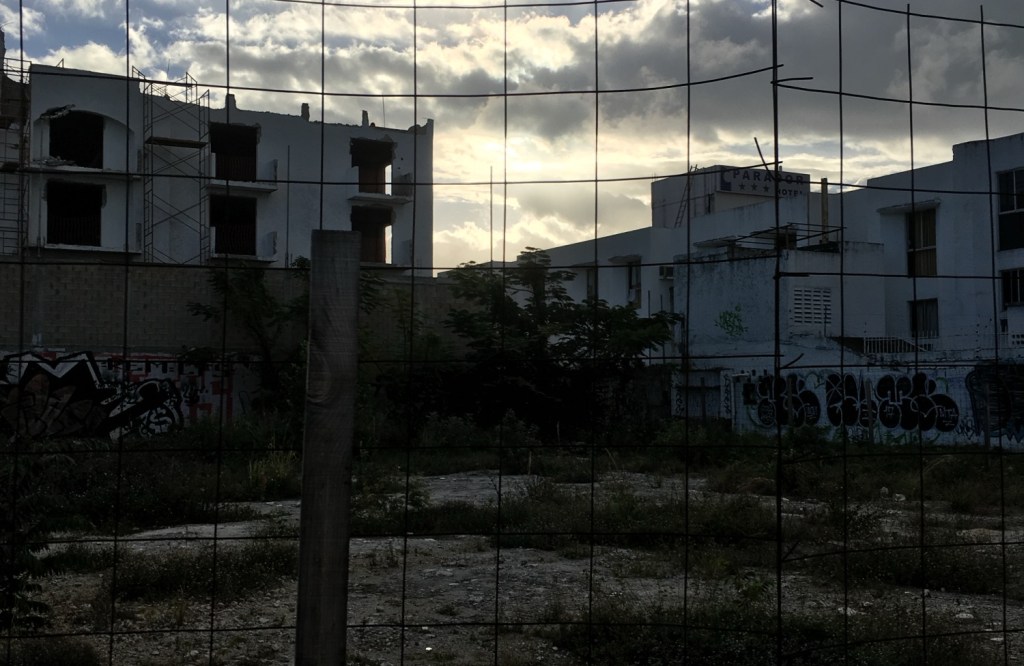
Sometimes I feel like Orpheus, torn apart by Thracian Maenads—ripped to shreds by intoxicated and ecstatic women who didn’t understand my sorrow, or perhaps they understood it too well. They’ve taken parts of me with them, scattering my body across continents like relics of a myth. My heart bleeds in Vancouver, my severed head impaled on a pole in Cancun, my hands and feet strewn across the prairie foothills where I was raised, and my torso beached on the coast of Jalisco. I am not whole anymore, fragmented by the violence of grief and the cruel passage of time.
I mourned Eurydice’s death for too long, it seems. The Maenads—tired of my lamentations and weary of my obstinate sorrow—grew impatient, murderously annoyed by my learned helplessness. I tried to defend myself from their attacks, singing songs to ward off the stones they flung at me, shielding myself with music. But over time, my energy flagged. My songs, once powerful enough to charm gods and beasts, grew weaker, their melodies faltering. When the music died, so did my defense. They descended on me, tearing me apart with their scorn and leaving me scattered, dismembered.
I know what you’re thinking—you must think I want you to see me as a victim, to feel pity for this broken, sacrificial version of myself. But that’s not what I’m after. I’m simply telling you the truth of it. I am like Orpheus, a severed head looking dispassionately upon my own dismembered corpse, an impartial observer to my own undoing. I know this might sound detached, even cold, but Mexico is a land where being chopped into pieces isn’t always a final sentence. If you’ve read the Popol Vuh, you’d know that even decapitation can be a recoverable injury. The head, in ancient stories, still has power. It still thinks, still speaks.
It’s these stories that give me courage. They teach me that I can pull together the scattered pieces of my life and forge something mythological, something whole, from the fragments. I believe that if I could just play a few notes on my recorder, maybe—just maybe—I could summon an eagle to lift my head from that pole in Cancun and carry it to Mexico’s opposite shore, where my torso lies buried in the sand. I imagine the eagle gliding over the ocean, with my severed head clutched in its talons, the wind whipping past, until it arrives at that distant shore. There, I would entice a whale, ancient and wise, to carry both head and torso along the coast, past the waves and the cliffs, until we finally reach Vancouver.
The thought comforts me—the idea that somehow, despite the distance, despite the dismemberment, I might still be able to pull myself together. That I could be whole again, even if it’s not in the way I used to be. Perhaps that’s the key to surviving all of this: understanding that the pieces may never fit quite the same, but they don’t have to. Maybe I can make a new man from what’s left.
 Chasing Lowry